
Acca Betting Strategies That Actually Work in 2026
 Available in US

The internet is drowning in accumulator betting strategies that promise consistent profits, guaranteed systems, and secret formulas that bookmakers don’t want you to know. Here’s the uncomfortable reality: none of them work, at least not in the way their sellers claim. If someone had a genuine system for beating accumulator betting long-term, they’d be quietly making millions, not selling ebooks for twenty quid.
That said, some approaches to acca betting are significantly less terrible than others. While no strategy overcomes the fundamental mathematical disadvantage built into accumulator structures, intelligent approach can minimize losses, maximize entertainment value per pound spent, and occasionally catch those rare streaks where everything aligns. The difference between a disciplined acca bettor and a reckless one isn’t profitability versus loss it’s controlled entertainment spending versus bankroll destruction.
This guide focuses on practical strategies that acknowledge mathematical reality while helping you make smarter decisions within the constraints of accumulator betting. You’ll learn how to construct accas that aren’t actively stupid, how to manage your stake sizing to survive losing streaks, when system bets make sense versus straight accumulators, and how to exploit bookmaker promotions without falling into traps. None of this guarantees profit, but it might help you lose less while enjoying the process more.
Table of Contents
The Myth of Winning Acca Systems: Setting Realistic Expectations
Before diving into actual strategies, we need to demolish some dangerous myths that lose people substantial money. The betting tips industry thrives on selling hope disguised as strategy, and accumulator betting is particularly vulnerable to this exploitation because the occasional big win creates survivorship bias that obscures the mathematical reality.
You’ll encounter strategies claiming you can turn five pounds into five thousand by following their selection methodology, or systems that supposedly identify safe banker bets to anchor your accumulators. These claims ignore that bookmaker margins compound across multiple selections, making consistent accumulator profit mathematically improbable regardless of selection quality. A 6% edge on each of five selections doesn’t compound to 30% edge it multiplies to create something closer to 34% edge against you once you account for all the combinations where at least one selection fails.
Professional sports bettors exist and some are genuinely profitable, but they typically focus on single bets where they identify value that exceeds the bookmaker’s margin. They place hundreds or thousands of carefully researched singles over time, accepting that they’ll win roughly 52-55% of them but that this edge generates profit through volume. They’re not building weekend accumulators hoping for lucky streaks. When professionals use accumulators at all, it’s typically in specific arbitrage or matched betting contexts that guarantee profit regardless of outcome strategies that require significant capital and often violate bookmaker terms of service.
The occasional acca success story you see on social media represents severe survivorship bias. For every bettor who turned two pounds into two thousand with a twelve-fold accumulator, there are literally thousands who lost their two pounds on similar bets. The winner screenshots their bet slip and it goes viral. The losers don’t post their failures, so you only see the distorted successful tail of the distribution. Your brain then overestimates how common these wins are because availability bias makes memorable examples feel more frequent than statistical reality.
Understanding this doesn’t mean giving up on accumulators entirely. It means approaching them with eyes open, treating them as entertainment spending rather than investment strategy, and measuring success by enjoyment per pound rather than profit extraction. If you spend fifteen pounds on accumulators over a month and get several hours of enhanced sports watching plus one modest win that returns thirty quid, you’ve had a better entertainment value per pound than going to the cinema. That’s a realistic success metric for accumulator betting.
Strategy One: The Conservative Banker Method
If you’re going to build accumulators, the conservative banker method offers better probability of occasional success than throwing together six random selections because you need big odds to make the potential return exciting. This approach prioritizes realistic win chances over massive payouts, typically using three to four selections with a specific structure.
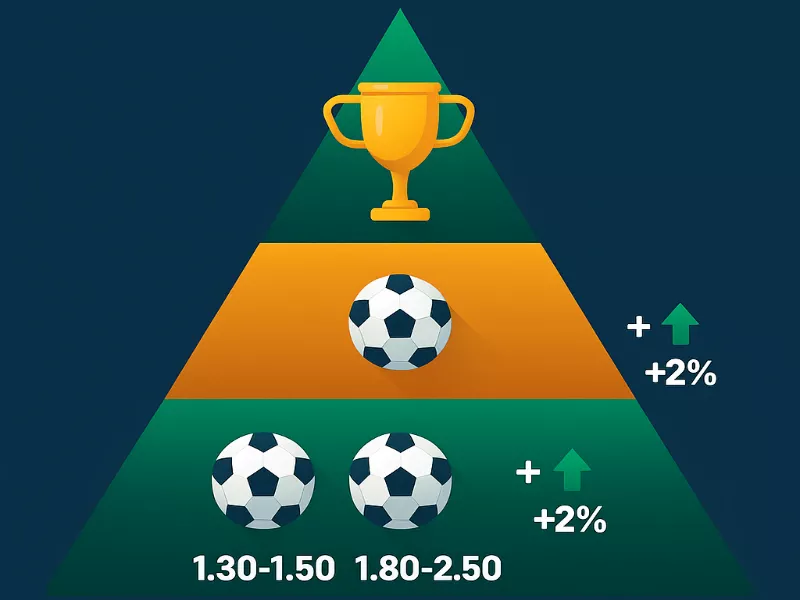
The core principle is balancing probability and odds by mixing one or two short-odds favorites with one or two medium-odds selections. Your short-odds picks might be around 1.30 to 1.50 genuine favorites where you’ve done proper research and believe they represent value, not just teams with famous names. Your medium-odds picks range from 1.80 to 2.50, representing outcomes that are plausible but not overwhelmingly likely. You avoid very short odds below 1.25 because they offer terrible value relative to risk, and you avoid long-shots above 3.00 because they dramatically reduce your overall success probability.
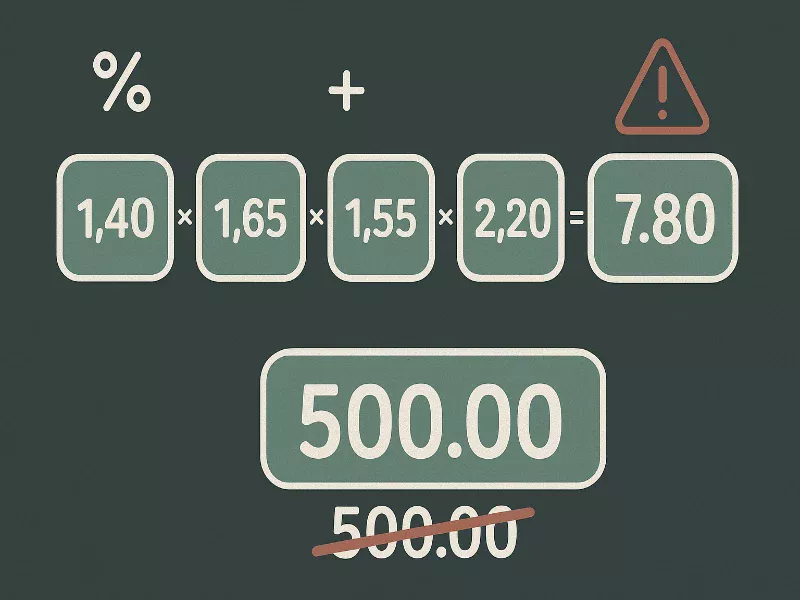
A typical conservative four-fold might look like this: Manchester City to beat a mid-table team at home at 1.40, Liverpool to win at 1.65, Arsenal to beat a struggling side at 1.55, and a carefully selected underdog or draw at 2.20. Combined odds come to approximately 7.80. Not spectacular, but significantly more achievable than fifteen-fold accumulators at 500.00 that require literally everything to go perfectly.
The selection process for this method demands actual research rather than wishful thinking. For your short-odds selections, verify they genuinely deserve those odds check team news, recent form, head-to-head records, and tactical matchups. A team at 1.40 isn’t automatically a safe bet just because the odds are short. Sometimes short odds reflect overestimation based on reputation rather than genuine quality. Your job is identifying favorites that are actually good value at their price, not just including any old favorite to anchor your acca.
For your medium-odds selections, focus on matches where you have genuine insight or edge. Maybe you follow a particular league closely and understand team dynamics that casual bettors miss. Maybe you’re alert to scheduling factors like teams playing their third match in seven days, or you track managerial impacts that bookmakers haven’t fully priced in yet. Your edge doesn’t need to be massive even a 2-3% improvement in assessment versus the betting market adds up when you make disciplined selections consistently.
Stake sizing for conservative accumulators should still represent only 1-2% of your betting bankroll. Just because your acca has better probability than a fifteen-fold moonshot doesn’t make it a safe bet. You’re still combining multiple uncertain outcomes where one bad bounce or refereeing decision can sink everything. The improved probability means you’ll hit these accas slightly more often, not that they’re reliable income sources.
One variation of this method involves rotating your selections rather than betting every weekend. If you typically place an accumulator every Saturday, try placing one every two or three weeks instead, only when you genuinely fancy multiple selections rather than forcing bets because it’s the weekend. This reduces volume but increases quality per bet, and the money you save from skipped weeks can be allocated to singles where you identify strong value. You’re not abandoning accas entirely you’re making them special occasion bets rather than weekly rituals.
The conservative banker method won’t make you rich and won’t generate the social media worthy wins that come from hitting twenty-fold long-shots. What it offers is better probability of occasional modest wins that keep accumulator betting sustainable as entertainment rather than rapid bankroll destruction. If your goal is maximizing fun-per-pound over months and years rather than chasing the one big score, conservative structure serves you better than reckless punt construction.
Strategy Two: Market-Specific Accumulator Approaches
Rather than building accumulators from standard match result markets where bookmakers have the sharpest pricing and largest margins, market-specific strategies focus on alternative markets where you might find better value or have superior knowledge compared to the general betting population.

Both Teams To Score accumulators remain popular because they offer a specific psychological advantage your bet stays alive until the final whistle. A 1-0 scoreline in the eightieth minute isn’t fatal; there’s still time for the losing team to grab a consolation goal and keep your acca breathing. This creates sustained engagement that match result markets can’t match, where you’re often effectively decided by halftime. The mathematics of BTTS accas isn’t fundamentally better than other acca types, but the entertainment value and engagement factor make them psychologically satisfying even when they ultimately lose.
When building BTTS accumulators, prioritize matches featuring teams with poor defensive records playing teams with reliable goal-scoring ability. Avoid matches where one team is significantly stronger and likely to dominate possession completely, as these often become one-sided routs where the weaker team never threatens goal. The sweet spot is competitive matches between teams that both attack reasonably well but defend poorly. League positioning matters less than underlying statistics a team sitting twelfth might have defensive issues that make them concede regularly despite respectable overall record.
Over/Under goals accumulators offer another market-specific approach. Rather than predicting winners, you’re assessing whether matches will be high or low scoring. This requires different analytical skills you’re evaluating tactical matchups, team playing styles, referee tendencies, and contextual factors like weather or schedule congestion. Some bettors develop genuine expertise in goal expectation analysis and find they have better hit rates on over/under markets than on match results.
A conservative over/under approach focuses on Over 1.5 goals markets, which hit in the vast majority of professional football matches and typically price around 1.10 to 1.30 depending on the teams. Combining four or five Over 1.5 selections creates modest combined odds around 2.00 to 4.00 with reasonably high success probability. This isn’t exciting, but it’s sustainable for bettors who value consistency over long-shot chasing. The edge comes from identifying matches where Over 1.5 is underpriced maybe because both teams need wins and will attack aggressively, or because recent defensive injuries haven’t been fully factored into the odds.
Asian Handicap accumulators appeal to more sophisticated bettors who understand handicap betting mechanics. Asian handicaps eliminate the draw by applying fractional handicaps, forcing a result one way or the other. This creates two-way markets instead of three-way markets, reducing bookmaker margin slightly. Building accumulators from Asian Handicap selections where you’ve identified value can theoretically offer better mathematical proposition than standard match results, though it requires deeper understanding of handicap markets and more analytical sophistication.
Corner markets offer another alternative, particularly for bettors who track corner statistics and understand which teams and leagues produce high or low corner counts. Over/Under corners, or predicting which team wins the corner race, are markets where casual bettors often don’t have strong opinions, potentially creating value opportunities for those who do the statistical homework. A four-fold accumulator from corner markets might combine selections from different leagues where you’ve identified consistent patterns that bookmakers haven’t fully priced.
The strategic principle across all these market-specific approaches is specialization. Rather than being mediocre at predicting match results across twenty leagues, you become genuinely knowledgeable about BTTS patterns in three leagues you follow closely, or you develop expertise in goals markets that gives you slight edge over bookmaker pricing. This specialization won’t guarantee profit the margins are still against you but it improves your hit rate marginally, which compounds when you make disciplined selections consistently over time.
Market-specific accumulators also force you to think more carefully about your selections rather than defaulting to lazy “team X should beat team Y” reasoning. When you need to assess corner counts or both teams scoring probability, you engage with the underlying data and team characteristics more deeply. This analytical engagement often reveals that you have less conviction about many bets than you thought, naturally reducing your volume toward higher-quality selections.
Strategy Three: Exploiting Bookmaker Promotions Intelligently
Bookmakers offer various promotions around accumulator betting acca insurance, odds boosts, enhanced returns for certain bet types and using these strategically can add genuine value to your betting without requiring you to overcome the fundamental mathematics through selection skill alone. The catch is that most promotions come with terms and conditions designed to benefit the bookmaker more than you, so intelligent exploitation requires reading the fine print.

Acca insurance promotions typically refund your stake as a free bet if one leg of your accumulator loses but all others win. This genuinely adds expected value because it converts some near-miss outcomes into second chances. A basic insurance offer might require minimum five-fold accumulator with minimum odds of 1.30 per leg, and it refunds up to twenty-five pounds if exactly one selection loses. To maximize value from this, you want to structure your accumulator so the insurance scenario is reasonably likely you need a high probability of getting four or five legs right but not necessarily all six.
The mathematical sweet spot involves selecting four or five strong favorites around 1.35 to 1.55 odds, then adding one slightly riskier selection at 2.00 to 2.50 odds. If all the favorites win, you’ve qualified for insurance and your riskier leg determines whether you win the full acca or trigger the refund. This structure gives you two ways to win either everything lands and you collect the full payout, or the risky leg fails but everything else wins and you get your stake back as a free bet to use on another wager.
Some bettors using matched betting techniques take this further by backing the accumulator with insurance then laying individual legs on betting exchanges to guarantee profit regardless of outcome. This requires significant capital and careful calculation but can extract 10-20 pounds of value per insured accumulator. If you’re not familiar with matched betting concepts, this probably isn’t your entry point stick to using insurance as a psychological safety net that makes near-misses less painful rather than trying to turn it into guaranteed profit.
Odds boost promotions offer enhanced odds on specific accumulators, usually pre-built selections that the bookmaker promotes. A typical boost might take a four-fold from 8.00 to 10.00, adding 25% to your potential return. These offers add genuine value if you were going to place that accumulator anyway, but they’re designed to tempt you into placing bets you wouldn’t otherwise make. The enhanced odds might still represent poor value if the underlying selections are terrible, and the bookmaker wouldn’t offer the boost if it didn’t ultimately benefit them through increased betting volume.
Critical evaluation of odds boosts requires calculating what you believe the true odds should be, then assessing whether the boosted odds exceed that. If a bookmaker boosts a four-fold from 8.00 to 10.00, but you calculate that the true probability suggests fair odds should be 12.00, you’re still taking negative value even with the boost. The promotion has made a bad bet less bad, not turned it into a good bet. Only take boosted accumulators when you independently assessed those selections as valuable and the boost makes them even more attractive.
Loyalty schemes and VIP programs sometimes offer ongoing acca-related benefits like weekly refunds on losing accumulators or bonuses on acca wins. These add long-term value for regular bettors, but you need to calculate whether the value received justifies the betting volume required to maintain VIP status. If you need to stake five hundred pounds weekly to get ten pounds weekly acca refund, you’re almost certainly losing more to bookmaker margins than you gain from the promotion.
The overarching principle when using promotions is to let them enhance bets you’d make anyway rather than letting them dictate your betting behavior. Promotions are marketing tools designed to increase betting volume and customer engagement. They offer genuine value when used selectively as part of your normal betting process. They destroy value when you start chasing promotions, placing bets you wouldn’t otherwise consider just because there’s insurance or a boost attached. The bookmaker has done the mathematics and ensured promotions are profitable for them on average your job is being selective enough that you fall into the profitable-customer exception rather than the loss-generating rule.
Strategy Four: Bankroll Management and Stake Sizing for Accas
The best selection strategy in the world fails if you’re staking recklessly and going bust during inevitable losing streaks. Bankroll management for accumulator betting requires more conservative approach than single betting because the all-or-nothing structure creates higher variance and longer periods between wins.
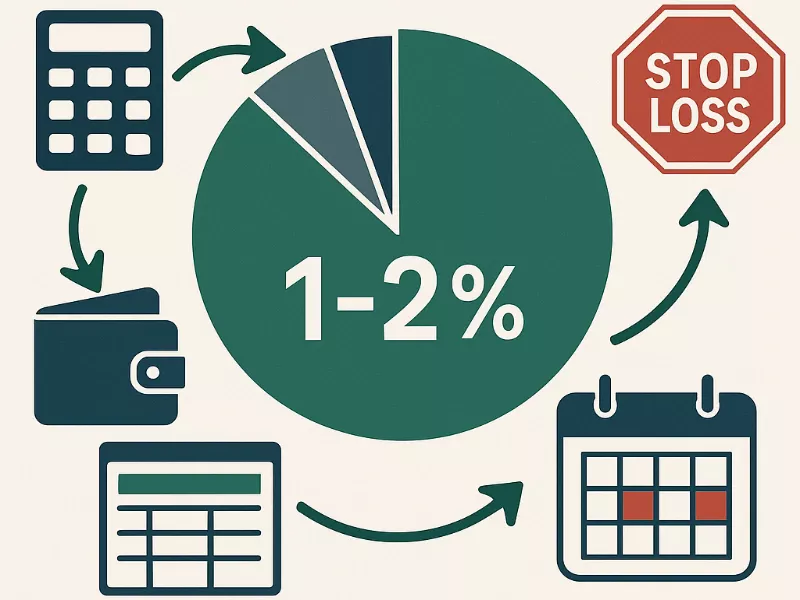
Your accumulator stakes should represent the smallest portion of your betting bankroll precisely because they’re the highest risk bet type you place. If you stake 5% of bankroll on well-researched single bets, your accumulator stakes should be 1-2% maximum. Some conservative bettors cap acca stakes at a flat five or ten pounds regardless of bankroll size, treating them as fixed entertainment spending rather than scaled investment. This approach has merit because it eliminates the temptation to chase losses by increasing stakes when your bankroll is already depleted from a losing streak.
The Kelly Criterion, a mathematical formula for optimal bet sizing based on edge and probability, typically suggests zero stake for accumulator bets because most bettors don’t have sufficient edge to overcome bookmaker margins on accumulators. If you’re placing them anyway for entertainment value, the Kelly-adjusted approach suggests treating your entire accumulator betting as one entertainment budget and allocating that budget across multiple smaller accas rather than concentrating it in fewer large-stake bets. Spreading ten pounds across two five-pound accumulators or five two-pound accumulators gives you more engagements and better probability that at least one hits compared to putting it all on one ten-pound acca.
Tracking results honestly is crucial for sustainable bankroll management. Most acca bettors remember their wins vividly and conveniently forget their losses, creating false impression of how they’re actually performing. A simple spreadsheet logging every accumulator date, selections, odds, stake, result, profit or loss provides objective reality check. Review this monthly. If you’re down significantly, either adjust your approach or accept that accumulator betting is pure entertainment spending and budget accordingly. If you’re somehow up over a meaningful sample size, analyze what you’re doing differently and maintain that discipline.
One bankroll management approach that works for some bettors is the seasonal reset. At the start of football season, allocate a specific amount maybe two hundred pounds as your season-long accumulator budget. Once that’s gone, you’re done with accas for the season regardless of how long it takes to burn through. This creates clear boundaries that prevent chasing and lets you enjoy accumulator betting without risk of serious financial damage. If you reach March with fifty pounds left, you’ve stretched your entertainment budget well and can finish the season with smaller stakes. If you burn through it by October, you’ve learned about your betting patterns and have the rest of the season to focus on other forms of engagement with sport.
Stop-loss limits within that seasonal budget add another protection layer. Maybe you limit yourself to twenty pounds in acca stakes per month. If you burn through that by mid-month, you’re done until the calendar flips. This forces you to be selective about which weekends actually warrant an accumulator rather than defaulting to weekly ritual betting. The months where you don’t hit your twenty-pound limit become opportunities to save that allocation or redirect it to single bets where you identify value.
Stake sizing should also account for the specific accumulator structure. A conservative three-fold at 5.00 deserves larger stake than a speculative eight-fold at 50.00 because the probability profiles are completely different. Some bettors use a sliding scale where three to four-fold accas can have 2% bankroll stakes, five to six-folds drop to 1%, and anything longer gets half-percent stakes maximum. This naturally adjusts your risk exposure based on probability while still allowing you to take occasional shots at longer accumulators when inspiration strikes.
The psychological dimension of bankroll management matters as much as the mathematical dimension. Accumulator betting triggers emotional responses excitement when legs are winning, despair when the last leg fails, euphoria if everything lands. Managing these emotions requires separating your betting bankroll from your living expenses completely, never chasing losses by dipping into money you need for other purposes, and developing the discipline to stick to predetermined limits even when the temptation to place just one more bet feels overwhelming. These aren’t gambling addiction warning signs necessarily they’re normal human responses to uncertainty and potential reward but they need conscious management to prevent them from undermining your financial stability.
Expertly verified: Oliver Bennett