
Matched Betting with Accas: Risk-Free Profit Guide
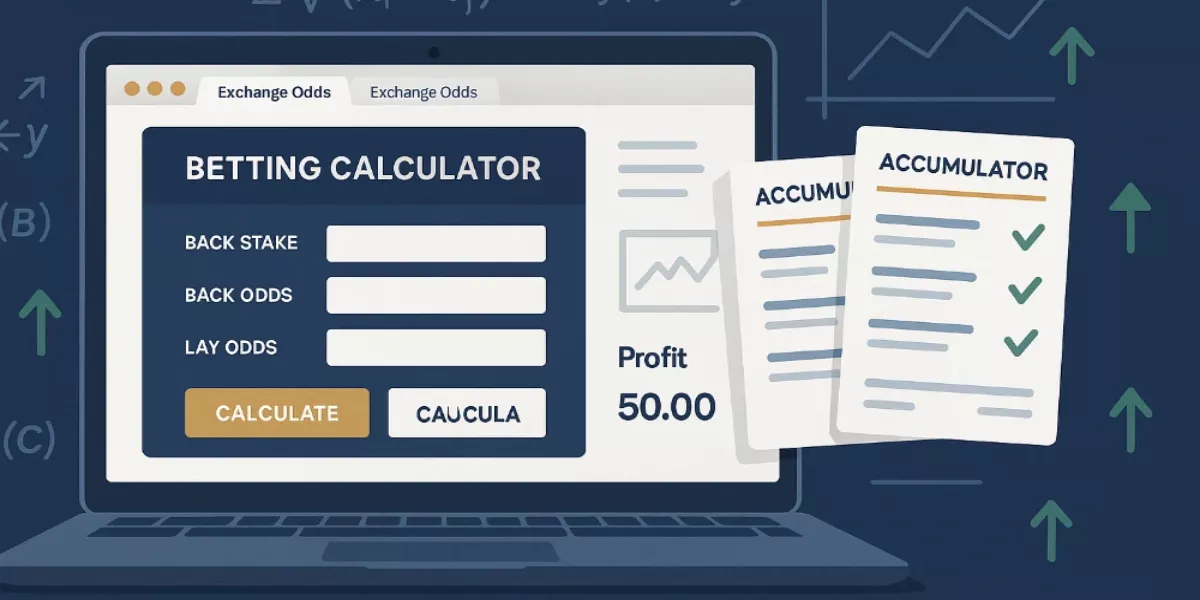
Matched betting transforms accumulator bets from entertainment gambling into mathematical profit extraction. While most bettors place accumulators hoping to get lucky with multiple correct predictions, matched bettors use accumulators systematically to guarantee profit regardless of outcome. This isn’t about being better at predicting football results it’s about exploiting bookmaker promotions through careful hedging on betting exchanges.
The concept sounds too good to be true, which makes many people suspicious. How can you guarantee profit from betting when bookmakers have mathematical edges built into their odds structures? The answer lies in bookmaker promotions, particularly acca insurance offers, combined with betting exchange liquidity that lets you bet against outcomes as well as for them. When you back an accumulator at a bookmaker with insurance, then strategically lay outcomes on an exchange, you create situations where you profit whether the acca wins, loses by one leg, or loses by multiple legs.
This guide covers the fundamentals of matched betting specifically for accumulator structures. You’ll learn why accumulators work particularly well for matched betting, the step-by-step process for executing profitable acca strategies, how to calculate expected value from insurance offers, the differences between sequential laying and full laying approaches, what tools and software help streamline the process, and the realistic profit expectations and time investments involved.
Table of Contents
Why Accumulators Work for Matched Betting
Accumulator insurance promotions are uniquely exploitable through matched betting because they create three distinct outcome scenarios with different value profiles. Unlike simple free bet offers where you either win or lose, insured accumulators give you: full win if everything lands, partial recovery via free bet if one leg fails, or complete loss if multiple legs fail. This three-outcome structure allows sophisticated hedging that guarantees profit across all scenarios.
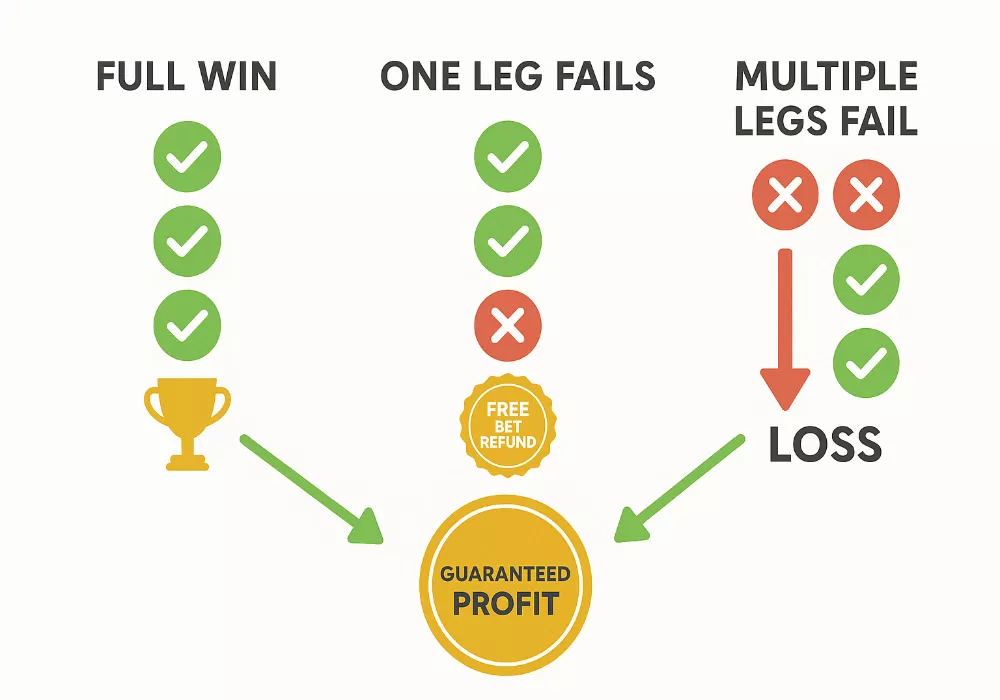
The mathematical foundation relies on bookmaker insurance reducing the cost of failure. Without insurance, an accumulator is all-or-nothing you either win big or lose everything. With insurance, the “one leg fails” outcome becomes substantially less painful because you get your stake back as a free bet. This asymmetry is what matched bettors exploit. By carefully structuring lay bets on exchanges, you can ensure that the various outcomes collectively produce guaranteed profit.
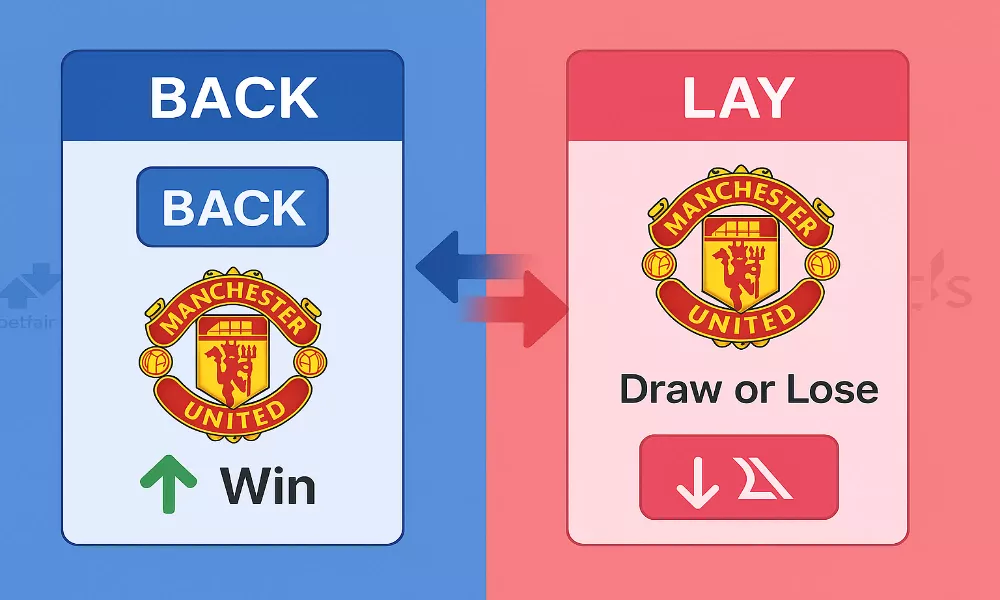
Betting exchanges provide the other critical ingredient. Exchanges like Betfair, Smarkets, and Betdaq let you lay bets, meaning you bet against outcomes rather than for them. If you back Manchester United to win at a bookmaker, you’re betting they will win. If you lay Manchester United at an exchange, you’re betting they won’t win they’ll either draw or lose. This ability to bet both sides of an outcome is what makes matched betting mathematically possible.
The commission structure on exchanges affects profitability but doesn’t prevent it. Most exchanges charge 2-5% commission on net winnings from each market. This eats into your margins but matched betting accounts for commission in profit calculations. The typical matched betting acca might generate 10-20 pounds profit on a fifty-pound acca when all costs and commissions are factored. Not spectacular returns, but genuinely risk-free profit that compounds over many bets.
Liquidity on exchanges determines which accumulators work for matched betting. Popular football markets on major leagues have deep liquidity, meaning you can lay substantial amounts without significantly moving odds. Obscure markets or niche sports often lack sufficient liquidity, making it impossible to lay the amounts needed for effective matched betting. This naturally constrains matched betting accas to mainstream markets where exchanges have built robust liquidity.
The time arbitrage element matters because odds change between when you place your back bet and when you place lay bets. If you back an accumulator on Wednesday for Saturday’s fixtures, odds might drift or shorten by Saturday. Matched betting profits increase when you can lock in favorable odds differences between bookmaker and exchange, though this requires active monitoring and quick execution when opportunities appear.
Bookmaker restrictions eventually limit matched betting profitability. Once bookmakers identify you as a matched bettor or advantage player, they restrict your account limiting stakes, excluding you from promotions, or closing accounts entirely. This means matched betting has a finite lifespan per bookmaker account, typically six to eighteen months depending on your betting patterns and how obvious you make your advantage play.
The Acca Matched Betting Process Step-by-Step
Executing a matched betting accumulator requires systematic process rather than improvisation. The complexity comes from managing multiple legs with different kickoff times, tracking which legs have settled, and adjusting lay bets as the accumulator develops. Here’s how the process works from start to finish.
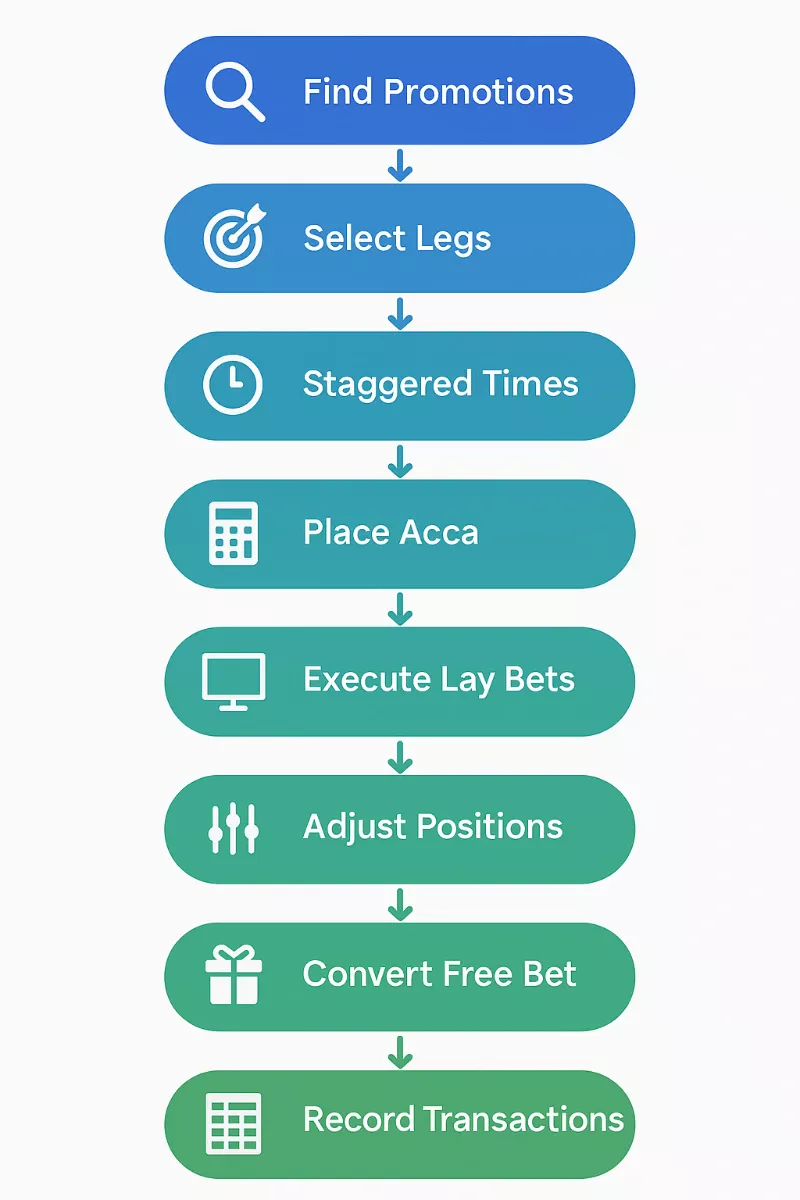
Start by identifying qualifying bookmaker promotions. You’re looking for acca insurance offers with favorable terms ideally lower minimum odds per leg, higher refund caps, and broad market coverage. Most matched bettors maintain spreadsheets tracking current promotions across multiple bookmakers, noting qualification requirements and expected value calculations for each offer.
Select your accumulator legs strategically. You want selections with tight back-to-lay spreads, meaning the odds difference between bookmaker backing odds and exchange laying odds is minimal. A selection where you can back at 2.10 and lay at 2.12 is much better for matched betting than backing at 2.10 and laying at 2.25, because tighter spreads reduce qualifying loss the small loss you take to unlock the value in the insurance promotion.
Choose selections with staggered kickoff times rather than simultaneous starts. If all your legs kick off at 3pm Saturday, you need to lay everything upfront and can’t adjust based on results. If legs kick off across Friday evening, Saturday afternoon, and Saturday evening, you can use sequential laying placing lay bets gradually as earlier legs settle, adjusting your strategy based on what actually happens.
Place your accumulator at the bookmaker, ensuring it meets all qualification requirements for insurance. Verify selection count, minimum odds per leg, eligible markets, and any other terms. Screenshot your bet slip as confirmation. Many matched bettors have lost insurance claims because they misread qualification requirements and assumed their bet qualified when it didn’t.
Execute your initial lay bets if using a full laying strategy. This means immediately laying your entire accumulator on the exchange at current odds. You’re locking in a small qualifying loss but guaranteeing that whether you win, trigger insurance, or lose completely, you’ve hedged enough to come out ahead after free bet conversion. The calculations for full laying are complex but matched betting calculators handle them automatically.
Alternatively, use sequential laying if your legs have staggered times. You lay each leg individually as it approaches, then adjust subsequent legs based on results. If your first leg wins, you’ve banked that profit and move to the second leg. If your first leg loses, you’ve triggered part of the insurance scenario and adjust how you lay remaining legs to optimize profit across possible final outcomes.
Track your accumulator in real time as results settle. You need to know immediately when each leg results because it affects your strategy for remaining legs. Most matched bettors use multiple browser tabs or dedicated apps to monitor both bookmaker bet tracking and exchange market movements simultaneously.
React to settled results by adjusting your lay positions if using sequential approach. This is where matched betting becomes more art than science, requiring quick mental calculation or software assistance to determine optimal lay stakes on remaining legs given what’s already happened. If four legs have won and one is pending, you need to calculate whether to lay more heavily to guarantee insurance-scenario profit or lay more lightly to chase the full acca win.
Convert your free bet if you trigger insurance by placing one leg losing. You’ll receive a free bet refund within 24-48 hours. Use this free bet on a high-odds selection where you can lay the same outcome on the exchange, converting the free bet into withdrawable cash. A typical free bet conversion extracts 80-85% of face value, so a twenty-pound free bet becomes about seventeen pounds profit after laying commission.
Record all transactions in a tracking spreadsheet. Matched betting involves many small profits across numerous transactions. Without careful records, you lose track of whether you’re actually profitable after all costs and commissions. Track every back bet, lay bet, commission paid, free bet earned, free bet converted, and net profit per promotion.
Expected Value from Acca Insurance Offers
Understanding whether an acca insurance offer is worth your time requires calculating expected value before you place bets. Not all insurance offers are created equal some generate ten pounds profit per attempt while others barely break even after accounting for qualifying losses and free bet conversion inefficiencies.
The baseline EV calculation starts with probabilities. You need to estimate: probability the acca wins completely, probability exactly one leg loses, probability two or more legs lose. These probabilities depend on your selection structure. A five-fold acca with selections averaging 1.80 odds has different probability distribution than a five-fold with selections averaging 1.40 odds.
For simplified analysis, assume a five-fold where each selection has 65% independent win probability. Probability all five win is roughly 12%. Probability exactly one loses is approximately 31%. Probability two or more lose is about 57%. These percentages determine how often you hit each outcome scenario.
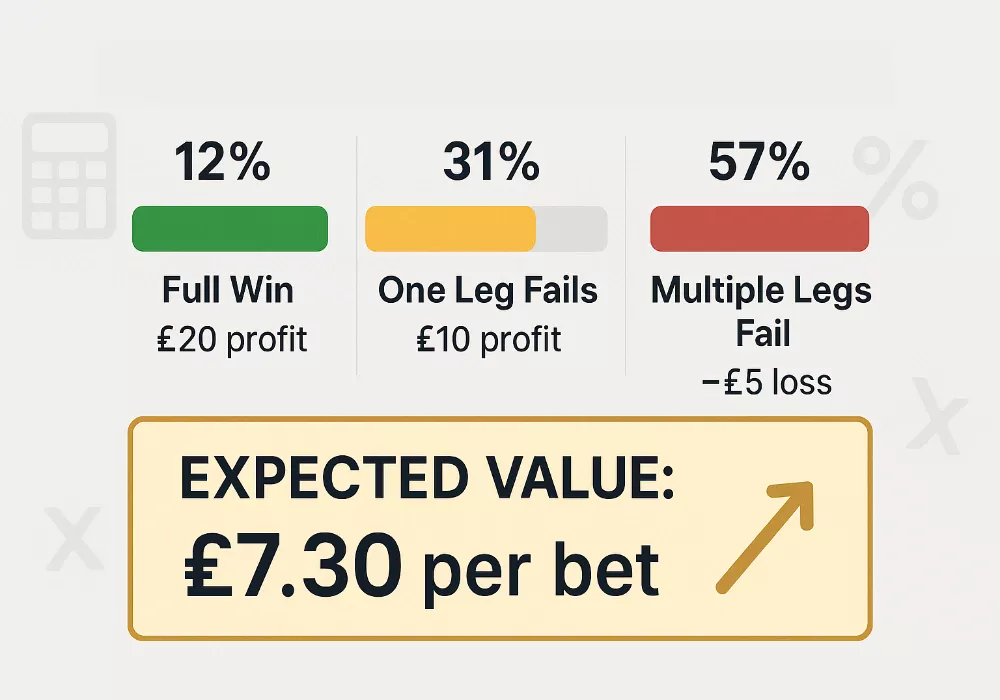
Calculate the profit or loss in each scenario. If your acca wins, you get the full payout minus your lay stakes and commission on exchange winnings. If one leg loses, you get a free bet refund worth about 85% of stake after conversion, minus your lay stakes and commission. If multiple legs lose, you lose your bookmaker stake minus any exchange winnings from successful lays.
Weight each outcome by its probability and sum them. If you have 12% chance of twenty-pound profit, 31% chance of ten-pound profit, and 57% chance of five-pound loss, your expected value is approximately 7.30 pounds per attempt. That’s your average profit across many identical bets, though individual results will vary significantly due to small sample size variance.
Comparing EV across different bookmaker offers guides where you focus effort. If Bookmaker A offers insurance with 8 pounds EV and Bookmaker B offers insurance with 14 pounds EV under similar qualification requirements, you prioritize Bookmaker B until you’ve exhausted that promotion’s lifetime value. EV per hour matters as much as EV per bet a complex accumulator requiring ninety minutes of management might have lower hourly rate than a simpler accumulator requiring thirty minutes despite higher absolute profit.
Variance affects how actual results deviate from expected value over short timeframes. With fifty-pound stakes and 12% win probability, you might place ten accumulators and hit zero complete wins, or you might hit three. This variance means short-term results swing widely around expectation. Matched betting profit materializes over dozens or hundreds of attempts as variance evens out and expected value emerges from statistical noise.
Minimum profit thresholds help decide which offers to pursue. If an insurance offer generates expected value below five pounds after all costs, many matched bettors skip it because the time investment doesn’t justify returns. Others pursue any positive EV offer regardless of magnitude, accumulating many small profits that sum to meaningful monthly totals.
Sequential Laying Versus Full Acca Laying
Matched bettors debate whether sequential laying or full laying produces better results for insured accumulators. Both approaches have mathematical and practical advantages depending on your circumstances and preferences.
Full laying means placing all your lay bets upfront when you place the accumulator. You calculate optimal lay stakes across all legs to guarantee profit regardless of final outcome, then execute everything immediately. This locks in your profit but requires substantial exchange float because you’re laying multiple outcomes simultaneously before any results settle.
The advantage of full laying is certainty and simplicity. You place your bets and you’re done no need to actively manage the accumulator as it develops. You’ve guaranteed your profit mathematically and can ignore the matches entirely if you want. This approach suits bettors who value hands-off processes over potential profit optimization.
The disadvantage is requiring larger exchange bankroll and potentially leaving profit on the table. Because you’re laying everything upfront, you can’t adjust based on results. If your first three legs win, you’ve already laid the fourth and fifth legs at odds that don’t account for the increased probability you’ll trigger insurance. Sequential laying lets you adjust stakes to capture this additional value.
Sequential laying places lay bets gradually as each leg approaches and settles. You lay the first leg, wait for the result, then decide how to lay the second leg based on what happened. This requires active management and multiple laying sessions across different times, but it optimizes profit by adapting to actual results.
The advantage is flexibility and often higher expected value. You can chase the full acca win if early legs succeed, or adjust toward maximizing insurance-scenario profit if an early leg fails. You use less exchange float at any given moment because you’re only laying one or two legs at a time rather than all five or six simultaneously.
The disadvantage is complexity and time commitment. You need to monitor the accumulator continuously, be available to place lay bets at specific times, and make quick calculations about optimal lay stakes given current situation. If you miss a kickoff or can’t access exchanges when needed, your matched betting profit can evaporate or transform into actual loss.
Hybrid approaches combine elements of both strategies. Some matched bettors fully lay one or two legs upfront to guarantee baseline profit, then sequentially lay remaining legs to optimize beyond that baseline. Others start with sequential laying but switch to full laying if they encounter timing conflicts that prevent active management.
The choice between strategies often depends on life circumstances. Full-time matched bettors who can dedicate attention to managing accumulators prefer sequential laying to maximize hourly profit. Casual matched bettors with full-time jobs who bet in spare time prefer full laying to avoid needing to be available at specific match kickoff times.
Exchange liquidity constraints sometimes force full laying even when you prefer sequential. If you’re placing a large-stake acca on less liquid markets, you might need to spread your lay bets across multiple exchanges or lay some legs well in advance to avoid moving odds significantly. This naturally pushes toward full laying before all results settle.
Tools and Software for Acca Matched Betting
Manual matched betting calculation for accumulators is possible but tedious and error-prone. Various tools streamline the process, though they come with subscription costs and learning curves. Understanding available tools helps you decide whether to invest in software or continue with spreadsheet-based approaches.
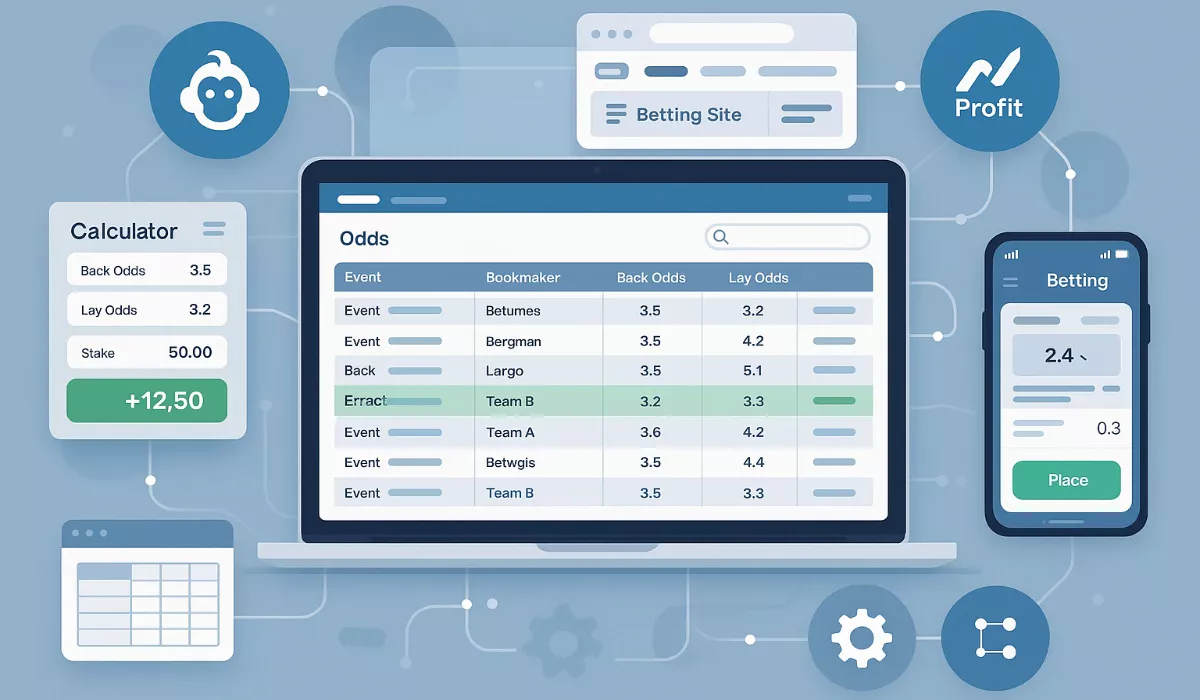
Dedicated matched betting platforms like OddsMonkey, Profit Accumulator, and Profit Squad provide comprehensive acca finding and calculation tools. These services maintain databases of current bookmaker promotions, identify qualifying accumulators with favorable back-to-lay odds, and calculate optimal lay stakes for various betting strategies. Monthly subscription costs range from fifteen to thirty pounds, positioning them as worthwhile investments if you’re serious about matched betting.
The OddsMonkey Acca Finder tool specifically targets insured accumulator opportunities. It scans bookmaker odds and exchange odds across qualifying markets, identifies accumulators where the back-to-lay spread is tight enough to generate meaningful EV, and displays expected profit for each potential acca structure. You can filter by sport, minimum odds, selection count, and expected value threshold to find opportunities matching your preferences.
Profit Accumulator’s Acca Catcher performs similar functions with slightly different interface and algorithms. Some matched bettors subscribe to both services temporarily to compare which tools they prefer, then maintain subscription with whichever platform better suits their workflow and finding capabilities.
Calculators handle the complex mathematics of optimal lay stakes. You input your back odds, lay odds, stake, commission rate, and betting strategy preference, and the calculator tells you exactly how much to lay on each leg. This eliminates manual calculation errors that can transform profit into loss through incorrect stake sizing.
Spreadsheet templates provide a free alternative to paid software for bettors who prefer complete control and transparency. Various matched betting communities share Google Sheets or Excel templates that automate acca calculations. These require more manual data entry and odds research, but they cost nothing beyond your time and they help you understand the underlying mathematics rather than treating it as black box.
Odds comparison websites like Oddschecker aggregate odds from multiple bookmakers and exchanges, streamlining the process of finding tight back-to-lay spreads. Rather than manually checking each bookmaker and exchange individually, you can scan comparison tables to identify selections with minimal spread that reduce qualifying losses.
Browser extensions and automation tools help with data entry and monitoring. Some matched bettors use custom scripts or browser extensions that auto-populate calculators with odds from bookmaker and exchange pages, reducing manual typing and copy-paste errors. These tools require some technical sophistication to set up but dramatically speed workflow for experienced matched bettors.
Smartphone apps extend matched betting capability to mobile devices. If you need to place or adjust bets while away from your computer, mobile apps from matched betting services and betting exchanges ensure you don’t miss opportunities or fail to react to settled results that require stake adjustments.
The learning curve for these tools varies. Casual matched bettors often start with free spreadsheet templates and basic manual processes, then upgrade to paid platforms if they decide matched betting is worth sustained effort. Professional matched bettors invest in comprehensive tool suites and develop efficient workflows that maximize hourly profit rates.
Realistic Profit Expectations and Time Investment
Matched betting with accumulators generates genuine profit but expectations need grounding in reality. This isn’t passive income and it’s not a path to wealth it’s a methodical process that exchanges time for modest but consistent returns.
Profit per accumulator typically ranges from five to twenty-five pounds depending on stake size, insurance terms, and odds quality. A fifty-pound stake on a five-fold with solid insurance might generate fifteen pounds expected value after all costs. Some accumulators produce more, others less, but this range captures the typical experience for UK matched bettors in 2025.
Monthly profit potential depends on how many accumulators you can execute and at what average EV. A dedicated matched bettor placing two or three insured accas per week at fifteen pounds average EV generates roughly 150 to 200 pounds monthly profit. This assumes you’re rotating through multiple bookmaker accounts and not yet restricted from major promotions.
Time investment per accumulator varies from thirty minutes to two hours depending on complexity and strategy. Finding a suitable acca, calculating stakes, placing bets, and managing through settlement takes time. Sequential laying demands more active hours than full laying because you’re engaging with the process across multiple sessions rather than one upfront session.
Hourly profit rates are modest by professional standards but attractive compared to many side hustles. If you average ten pounds profit per hour of matched betting work, you’re earning better than many casual employment options while working from home on flexible schedule. This makes matched betting appealing for students, parents with childcare constraints, or anyone seeking supplemental income without fixed scheduling requirements.
The learning curve means initial attempts generate lower profit as you develop skills and workflows. Your first few accumulators might take three hours and produce five pounds profit terrible hourly rate. By your twentieth accumulator, you’ve streamlined the process to forty-five minutes and consistently hit twelve-pound profit much better rate. Persistence through the learning phase determines whether matched betting becomes genuinely profitable for you.
Bookmaker restrictions eventually end matched betting profitability per account. Most accounts survive six to twelve months of matched betting before restrictions hit. Some bettors get restricted within weeks if they’re too obvious. Others maintain access for years through careful behavior management. Once you’re restricted from promotions, that bookmaker stops contributing to matched betting profit though you might retain access for other betting activities.
Account cycling extends matched betting lifetime by using household members’ accounts with their permission. This introduces complexity and potential regulatory issues, so many matched bettors choose not to pursue this approach. Others view it as legitimate use of available accounts within household, particularly when involving partners who genuinely participate in betting activity.
The psychological dimension matters despite mathematical certainty. Even though matched betting guarantees profit long-term, individual accumulators lose frequently in ways that feel frustrating. Watching nine legs win then one leg fail triggers emotional responses despite knowing the insurance will refund you. Developing emotional distance from individual outcomes while maintaining focus on long-term expected value separates successful matched bettors from those who quit prematurely.
Matched betting with accumulators works as proven by thousands of people who do it consistently. It’s not a scam and it’s not too good to be true it’s mathematical exploitation of bookmaker promotions that genuinely generates risk-free profit. Whether it’s worth your time depends on your personal value of time, alternative income opportunities, and tolerance for systematic processes that involve many small transactions rather than dramatic windfalls.
After exploring how matched betting techniques can be combined with accumulator strategies to reduce risk and improve betting efficiency, readers can always return to the acca-bet to continue browsing the platform’s other guides.
If you want to understand how the mathematical structure of accumulator bets works before applying these strategies, it is very helpful to read the guide on how to calculate acca odds.
Expertly verified: Oliver Bennett