
Acca Betting Results: Odds Risk and Accumulator Loss Factors
 Available in US

There’s a specific kind of pain that only accumulator bettors know. You’ve researched your selections all week, built what feels like a solid four-fold, and watched three legs sail home comfortably. Then the fourth match hits the ninetieth minute with your team leading 1-0, and somehow, impossibly, they concede from a corner in stoppage time. Your acca dies. Again. For the eighth weekend in a row.
If this scenario feels uncomfortably familiar, you’re not alone. The vast majority of accumulator bettors lose money consistently, not because they’re uniquely unlucky or terrible at predicting football, but because they’re making systematic mistakes that guarantee failure over time. Some of these mistakes are mathematical stacking too many selections or chasing odds that require unrealistic perfection. Others are psychological letting confirmation bias guide selections or chasing losses with increasingly desperate bets. Many are strategic failing to do proper research or misunderstanding what actually makes an accumulator viable.
The good news is that recognizing these patterns is the first step toward fixing them. You won’t transform into a profitable acca bettor overnight, and you might never become profitable at all given the mathematical realities of bookmaker margins. But you can absolutely reduce your losses, improve your hit rate marginally, and make accumulator betting sustainable entertainment rather than bankroll destruction. This guide breaks down the most common reasons accumulators fail and provides specific, actionable fixes for each problem.
Table of Contents
- The Cold, Hard Truth About Acca Win Rates
- Mistake One: Adding Too Many Selections
- Mistake Two: Betting on Heavy Favorites Without Value
- Mistake Three: Poor Research and Lazy Selection
- Mistake Four: Chasing Losses with Bigger Accumulators
- Mistake Five: Ignoring Correlation and Variance
- Mistake Six: Misusing Cash-Out Features
The Cold, Hard Truth About Acca Win Rates
Before diving into specific mistakes, you need to understand the baseline reality of accumulator probability. Most bettors dramatically overestimate their chances of winning accumulators because human brains are terrible at intuitively grasping compound probability. We see four reasonable selections and think “these should all win,” missing the exponential way that individual probabilities multiply together.
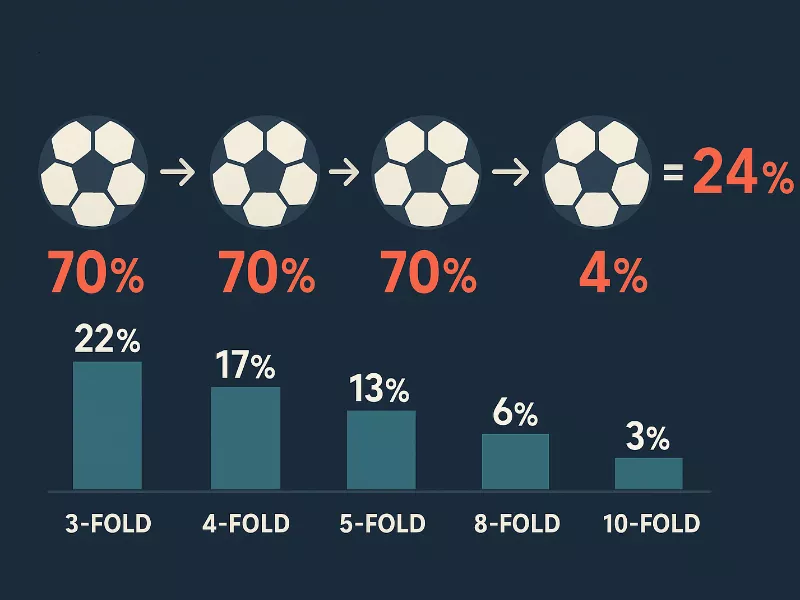
Let’s establish some mathematical reality with concrete numbers. Suppose you build a four-fold accumulator where each selection has a 70% chance of winning these are strong favorites based on your analysis. What’s your probability of all four winning? Most people guess somewhere around 60-65%. The actual calculation is 0.70 times 0.70 times 0.70 times 0.70, which equals roughly 24%. Even with four selections that individually have a 70% chance, your accumulator only wins about one in four attempts.
Extend this to a six-fold accumulator with the same 70% probability per leg, and your success rate drops to approximately 12%. An eight-fold? Around 6%. A ten-fold? Less than 3%. These aren’t theoretical abstractions they’re the mathematical reality of combining multiple uncertain outcomes into a single all-or-nothing bet. The attractive odds your bookmaker displays reflect this probability, but most bettors focus on the potential return rather than the actual likelihood of achieving it.
Industry data from bookmakers shows that the vast majority of accumulator bets lose. The exact percentages vary by bet type and selection count, but bookmakers wouldn’t actively promote accumulators through insurance offers, odds boosts, and featured bet slips if they weren’t reliably profitable for the house. Every time you see a bookmaker advertising “build your acca” features or highlighting massive accumulator wins, you’re seeing marketing designed to encourage bet types that statistically favor them.
The bookmaker margin compounds across accumulator legs in a way that doesn’t happen with single bets. If each leg carries a 5% bookmaker margin, that margin multiplies through your entire accumulator structure. By the time you’ve combined five or six selections, the bookmaker’s effective edge might be 25-30% or higher. You’re not just fighting probability you’re fighting probability while giving the house a massive mathematical advantage that increases with every leg you add.
Understanding this doesn’t mean abandoning accumulators entirely, but it does mean adjusting your expectations dramatically. If you’re placing accumulators expecting to profit long-term, you’re setting yourself up for disappointment and potential financial problems. If you’re placing them as entertainment with realistic understanding that most will lose, you can budget appropriately and avoid the psychological damage that comes from repeatedly failing to meet unrealistic expectations.
Mistake One: Adding Too Many Selections
The greed trap catches almost every accumulator bettor at some point. You’ve identified three solid selections that feel right, giving you combined odds around 4.00. But 4.00 doesn’t feel exciting enough for the potential return to justify the risk. So you scan through more fixtures, adding a fourth leg that bumps you to 7.00, then a fifth that pushes toward 13.00, then maybe a sixth because why not chase that 25.00 dream?
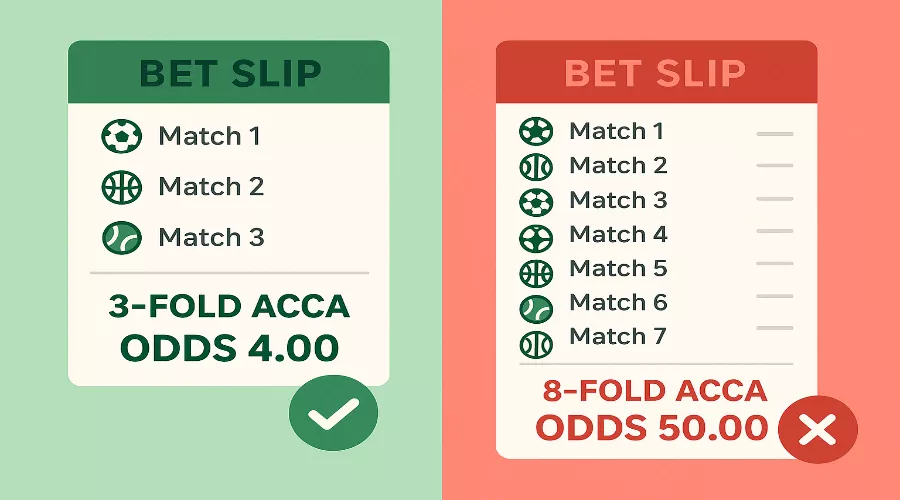
Each additional selection you add doesn’t just increase your odds it exponentially reduces your probability of winning. Going from a three-fold to a four-fold might seem like a modest expansion, but you’re adding an entirely new failure point where your bet can die. The fourth selection needs to win just like the other three, and the more selections you stack, the more likely it becomes that at least one will fail in an unexpected way.
The mathematics are brutal. If you have three selections with 60% win probability each, your three-fold has roughly 22% chance of success. Add a fourth selection with the same probability and you drop to about 13% success rate. Add a fifth and you’re at 8%. By the time you reach eight selections, even if each individually has a 60% chance, your accumulator’s overall probability is below 2%. You’re essentially playing the lottery at that point, except lottery tickets are cheaper and you don’t have to watch eight football matches to find out you lost.
The sweet spot for accumulator selection count depends on your goals. If you’re genuinely trying to maximize probability of occasional wins while still getting meaningful odds multiplication, three to four selections typically offers the best balance. You get combined odds high enough to make the bet interesting roughly 4.00 to 10.00 depending on individual selection odds while maintaining success probability above 10-20% if you’re choosing well.
Five-fold and six-fold accumulators push into riskier territory but remain within the realm of reasonable entertainment betting. Your success probability drops significantly, but you’re not yet in the absurd territory of ten-fold or fifteen-fold accumulators that require literally everything to go perfectly. Seven-plus selections should be reserved for occasions when you genuinely fancy that many outcomes and you’re treating the bet as a long-shot lottery ticket with entertainment value, not as serious betting strategy.
The fix is discipline. Before adding another selection to your accumulator, ask yourself honestly: am I adding this because I genuinely believe it’s a strong pick that adds value, or am I adding it because I want bigger odds? If the answer is the second option, stop. Place your three-fold or four-fold at modest odds and accept that not every accumulator needs to be a moonshot. The bettors who survive long enough to occasionally hit bigger wins are the ones who resist the temptation to bloat every accumulator into an unwinnable monster.
Track your historical results by selection count. If you’ve placed fifty accumulators over six months, sort them by number of legs and calculate your actual win rate for three-folds versus four-folds versus six-folds. You’ll almost certainly find that your shorter accumulators hit more frequently even if they return less per win. This data should inform your future betting behavior, helping you find the selection count that matches your risk tolerance and entertainment preferences.
Mistake Two: Betting on Heavy Favorites Without Value
The false safety trap is insidious because it feels logical. Manchester City are playing a relegation-threatened team at home. City are 1.20 to win. That feels safe, right? So you build an accumulator with five selections like this City at 1.20, Liverpool at 1.25, Arsenal at 1.18, Bayern Munich at 1.15, and Real Madrid at 1.22. Combined odds work out to roughly 3.30. You’re thinking “five strong teams against weak opposition, this should come through.”
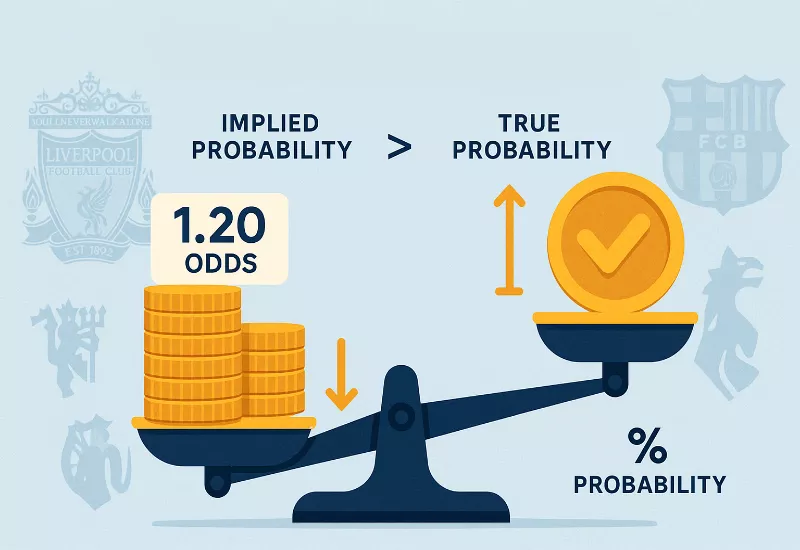
The problem is that heavy favorites frequently fail to deliver, and when you stack them in accumulators, you’re compounding negative value rather than building safety. Those short odds already reflect high probability the bookmaker and betting market have assessed that City have an 83% chance of winning at 1.20 odds. But the bookmaker’s margin means the true probability is probably closer to 80% or even 75%. You’re not getting compensated fairly for the 20-25% chance of something going wrong.
Heavy favorites disappoint for numerous reasons that casual bettors underestimate. The stronger team might rotate key players for fixture congestion management. The weaker team might play ultra-defensive with eleven men behind the ball, grinding out a 0-0 draw. The favorite might score early and then cruise, allowing the underdog to grab a late consolation and nick a 1-1 draw. Refereeing decisions impact favorites disproportionately because they usually have more possession and attacking play, creating more opportunities for controversial calls.
When you combine five heavy favorites in an accumulator, you need all five to behave as expected. Even if each individually has an 80% chance of winning, your five-fold has only about 33% probability of all five coming through. That’s one in three attempts succeeding, yet your combined odds of 3.30 imply roughly 30% probability. The bookmaker’s compounded margin means you’re taking slightly negative value on a bet that already has a 67% chance of failure.
The fix involves focusing on value rather than certainty. Value betting means finding selections where you believe the true probability of winning exceeds what the bookmaker’s odds imply. A team at 2.20 odds might represent better value than a team at 1.20 if your analysis suggests the first team has a 55% chance of winning versus the implied 45%, while the favorite has an actual 78% chance versus the implied 83%.
This requires developing genuine analytical skills rather than relying on name recognition or league standings. You need to assess team news, tactical matchups, motivation factors, scheduling impacts, and numerous other variables that influence match outcomes. Most accumulator bettors skip this work, defaulting to “big team should beat small team” reasoning that the bookmakers have already priced in with their odds.
Consider targeting odds in the 1.60 to 2.50 range for your accumulator selections. This range typically represents outcomes that are plausible without being overwhelming favorites. You’re not backing 1.15 shots that offer terrible value, and you’re not backing 4.00 long-shots that dramatically reduce your success probability. The middle range forces you to find genuine analysis-based edges rather than lazy favorite-stacking.
Another approach involves mixing your selection types rather than building accumulators entirely from match results on heavy favorites. Including a both teams to score selection at 1.70, an over 2.5 goals market at 1.80, and a couple of match results around 2.00 creates odds diversity while potentially giving you better probability-adjusted value than five short-priced favorites multiplied together.
Mistake Three: Poor Research and Lazy Selection
The Sunday evening panic punt is familiar to many accumulator bettors. You’ve watched football all weekend without placing a bet, and now it’s 6pm with evening matches about to kick off. You don’t want to miss out on the action, so you quickly scan the fixtures, pick four teams that sound good based on nothing more than recent memory and league position, and throw a tenner on an accumulator you barely understand. This bet almost always loses, and it should lose because it’s based on essentially zero research or analysis.
Lazy selection stems from treating accumulator betting as spontaneous entertainment rather than decision-making that deserves thoughtful consideration. You wouldn’t randomly invest money in stocks you know nothing about, yet bettors routinely put money on football teams they haven’t researched, in leagues they don’t follow, based on vibes and gut feelings. The bookmakers have algorithms, historical data, and teams of analysts pricing these markets. You’re arriving with hunches and hoping for the best.
The most common lazy selection behavior involves copying tips from social media, betting forums, or tipster accounts. Someone posts a “weekend accumulator” with six selections and confident explanations. You think “they sound knowledgeable, I’ll follow their picks.” But you have no idea whether this tipster has a genuine track record, understands the matches they’re recommending, or is just another punter making educated guesses. Following tips without independent verification means you’re outsourcing your decision-making to strangers whose incentives and information you don’t understand.
Even worse is the “name recognition” selection process. You’re building an accumulator and need a fourth leg. You see Manchester United are playing at 1.75 odds. United are a famous club, 1.75 feels reasonable, so you add them without checking whether they’re missing key players, whether they’ve lost three straight matches, or whether their opponent has a particularly strong recent record. You’re betting on brand recognition rather than current form and matchup analysis.
The fix requires committing to a research minimum before including any selection in your accumulator. This doesn’t mean spending hours on each selection, but it does mean checking several baseline factors that materially impact match outcomes. Start with team news are there any significant injuries or suspensions affecting either side? A team missing their starting goalkeeper and two center-backs has dramatically different defensive prospects than the same team at full strength.
Check recent form beyond just results. A team that won their last match 1-0 with an early goal and then defended desperately looks different from a team that won 3-1 while controlling the game throughout. Expected goals statistics, possession percentages, and shot metrics give you deeper insight into whether recent results reflect genuine quality or unsustainable luck. A team winning games while being outplayed probably faces regression soon.
Head-to-head records matter more than many bettors realize. Some teams consistently struggle against specific opponents regardless of current form or league position. If Team A has lost six of their last seven meetings with Team B, that’s meaningful information that should factor into your analysis. Stylistic matchups create patterns that persist across seasons certain tactical approaches counter others effectively even when the teams’ overall quality seems mismatched.
Contextual factors like scheduling, motivation, and weather deserve consideration. A team playing their third match in seven days faces fatigue issues that might not show in simple form guides. A team chasing European qualification in the season’s final weeks has different motivation than a mid-table team with nothing to play for. Heavy rain or strong winds affect match dynamics, particularly for teams that rely on technical passing rather than direct play.
You don’t need to become an expert analyst overnight, but you should refuse to include any selection in your accumulator unless you can articulate at least three specific reasons why you fancy that outcome. If you can’t explain why you think Team X will beat Team Y beyond “they’re higher in the table,” you don’t have a selection you have a guess. Guesses occasionally win, but they lose far more often than research-based selections.
Mistake Four: Chasing Losses with Bigger Accumulators
The desperation spiral destroys more accumulator betting bankrolls than any other single mistake. Saturday’s four-fold loses when the last leg fails in the ninetieth minute. You’re frustrated, you feel like you were unlucky, and you convince yourself that you’re “due” a winner. So Sunday you place another accumulator, maybe adding an extra leg or two to get bigger odds because you need to recover Saturday’s loss plus make some profit. Sunday’s acca loses too. Now you’re down twenty or thirty pounds and Monday arrives with more fixtures. You go bigger still, chasing what you’ve lost, and the spiral continues until you’ve burned through your betting budget entirely.
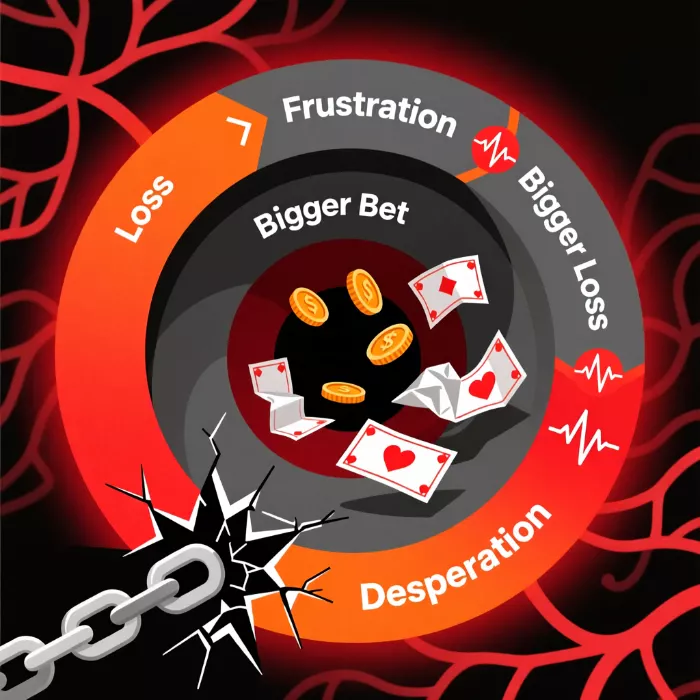
This pattern reflects the sunk cost fallacy combined with the gambler’s fallacy. The sunk cost fallacy makes you believe that money already lost somehow affects the value of future bets that your losses “deserve” to be recovered through continued betting. The gambler’s fallacy makes you believe that past losses make future wins more likely, that you’re somehow due a winner after a losing streak. Both beliefs are mathematically false. Each accumulator is an independent event with its own probability unaffected by your previous results.
Chasing losses with bigger stakes or longer accumulators is the fastest path to going bust. The frustration and desperation cloud your judgment, making you select outcomes based on wishful thinking rather than analysis. You add legs you wouldn’t normally consider because you need the odds to reach a certain level. You stake more than your bankroll management rules allow because you’re trying to recover multiple losses with one win. Everything about your decision-making deteriorates when you’re chasing.
The emotional dimension of chasing is powerful and difficult to resist. Losing feels bad, and humans are wired to seek immediate relief from bad feelings. Placing another bet creates hope and distraction from the disappointment of losing. Even when you know intellectually that chasing is destructive, the emotional impulse to “just this once” place a recovery bet can be overwhelming. This is normal human psychology, not a character flaw, but it needs active management to prevent it from wrecking your finances.
The fix requires pre-committed rules that you establish when you’re emotionally neutral, not in the moment of frustration after a loss. First rule: you never increase your stake size or selection count in response to a losing bet. Your stake sizing is predetermined based on bankroll management principles, and it doesn’t change just because you’re down money. If your normal accumulator stake is ten pounds, it stays ten pounds whether you won last weekend or lost five weekends in a row.
Second rule: you implement mandatory cooling-off periods after losses. Maybe you decide that after any losing accumulator, you wait at least 24 hours before placing another one. This breaks the immediate emotional feedback loop where frustration leads directly to another bet. By the next day, you’re usually calmer and more capable of rational decision-making. Some bettors extend this to a “one accumulator per weekend” rule that prevents the Saturday-then-Sunday-then-Monday spiral entirely.
Third rule: you track your losses honestly and set hard stop-loss limits. Maybe you decide that if you lose fifty pounds on accumulators in a month, you’re done with accumulators until the next month starts regardless of how many attractive fixtures remain. This creates a floor beneath which you cannot fall during any single period, protecting you from catastrophic damage during bad runs.
Fourth rule: you explicitly remind yourself that accumulator betting is entertainment spending, not investment or income generation. The money you stake on accumulators should be money you’re comfortable losing entirely, similar to money you spend on cinema tickets or restaurant meals. If losing this money would affect your ability to pay rent or buy groceries, you’re staking too much and need to reduce your budget immediately.
Breaking the chasing pattern also involves developing alternative responses to losses. Instead of immediately placing another bet when an accumulator loses, try going for a walk, watching the next match as a neutral, or engaging with football through different channels like reading tactical analysis or playing a football game. The goal is disrupting the automatic loss-bet-loss-bet cycle that characterizes chasing behavior.
Mistake Five: Ignoring Correlation and Variance
The independence illusion is subtle but costly. You’re building an accumulator with selections from Saturday’s Premier League fixtures four different matches featuring different teams. These selections feel independent because they involve different games, but hidden correlations often exist that reduce your actual probability below what simple multiplication suggests.
Weather provides an obvious example. If heavy rain affects the entire northwest region, both Manchester derbies and Liverpool’s match are all played in similar conditions that favor certain styles and reduce goal-scoring probability. Your “independent” selections for multiple matches in the region are actually correlated through weather impact. Similarly, if an unexpected result happens early in the day say, the league leader loses at home to a relegation candidate it often signals a day where favorites struggle, making your other favorite-based selections more correlated than they appear.
Referee assignments create another correlation source. A notoriously strict referee who calls numerous fouls and issues frequent cards affects match flow and scoring patterns differently than a lenient referee who lets play continue. If you’re betting both teams to score across multiple matches with the same referee officiating, you’ve introduced correlation through officiating style that might not be obvious from looking at team statistics alone.
League-wide patterns create temporal correlation. During fixture-congested periods when teams play midweek European matches then weekend domestic fixtures, fatigue affects multiple teams simultaneously. If you’re backing several teams in this situation, they all face similar rest disadvantages that correlate their performance prospects. International breaks create similar issues teams with many players away on international duty often struggle in the first fixture after the break, regardless of their opponent.
Variance affects accumulators more severely than single bets because each leg represents a separate chance for variance to strike. Even well-researched selections face randomness a wrongly disallowed goal, an own goal from a deflection, an injury to a key player in the opening minutes. When you combine four or five selections, you’re compounding these variance opportunities. The more legs you include, the more likely it becomes that random chance disrupts at least one of them.
The fix involves consciously evaluating potential correlations before finalizing your accumulator. Ask yourself whether your selections might be correlated through weather, scheduling, league dynamics, or any other factor that affects multiple teams simultaneously. If you identify strong correlation, consider whether your accumulator’s probability is actually lower than simple multiplication suggests, and adjust either your selections or your expectations accordingly.
Diversifying across leagues and competitions reduces some correlation risk. Instead of taking all four selections from Saturday’s Premier League fixtures, consider mixing in a match from the Championship, a game from La Liga, and maybe a Bundesliga fixture. Geographic and competitive diversity means your selections are less likely to be affected by common factors. The exception is when you’re specifically exploiting league-specific knowledge if you follow the Championship closely and have genuine analytical edge there, it might make sense to concentrate your selections in that league despite correlation risk.
Accepting variance as inevitable rather than fighting it helps psychologically. You will lose accumulators where all your analysis was sound and you simply got unlucky with random events. A team will dominate a match statistically and lose 0-1 to a fluke goal. A defender will slip at the wrong moment leading to a conceded goal that kills your acca. These outcomes are frustrating but they’re part of football’s inherent randomness. Fighting against variance by assuming you must have analyzed poorly leads to second-guessing your methodology unnecessarily.
Managing variance involves sample size thinking rather than individual bet outcome thinking. One accumulator losing to bad luck tells you nothing useful. Twenty accumulators over several months losing consistently suggests your selection process needs improvement. The more bets you place, the more variance evens out and true skill edge (or lack thereof) emerges. If you’ve placed fifty accumulators using careful analysis and you’re still losing heavily, variance probably isn’t your problem your baseline methodology needs reassessment.
Mistake Six: Misusing Cash-Out Features
The cash-out trap catches bettors who don’t understand when the feature adds value versus when it extracts value in the bookmaker’s favor. You’ve placed a four-fold accumulator and three legs have won. Your final leg is in the seventieth minute with your team leading 1-0. The bookmaker offers to let you cash out now for forty pounds from your ten-pound stake rather than risking the last twenty minutes for the full sixty-pound payout. Do you take it?

Most bettors approach this decision emotionally rather than mathematically. They focus on securing profit and avoiding the pain of a late equalizer killing their nearly-won acca. This psychological framing makes cash-out feel safe and sensible. But the bookmaker is offering you forty pounds because their live pricing algorithm calculates that your bet’s fair value is higher probably around forty-five to fifty pounds. They’re making you an offer designed to extract value from you in exchange for certainty.
Cash-out works in the bookmaker’s favor most of the time because they price the offer below fair value. Think about it from their perspective they’re offering to close a bet that might cost them sixty pounds if your team holds on, or costs them nothing if your team concedes. They’re not offering fair value for your position. They’re offering enough to be tempting but not enough to be fair, banking on your risk aversion and emotional desire for certainty.
The rare situations where cash-out makes sense involve specific bankroll considerations or risk-of-ruin scenarios. If forty pounds represents a meaningful addition to your bankroll that allows you to bet comfortably for another month, while sixty pounds doesn’t materially change your situation, taking the cash-out might be justified even at slightly unfavorable value. If you’re on a severe losing streak and forty pounds prevents you from going bust entirely, accepting the offer might be better than risking zero return.
For most casual accumulator bettors placing modest stakes, cash-out reduces expected value without providing meaningful risk mitigation. You’re paying a premium for certainty that doesn’t actually improve your overall betting results. Over many accumulator bets, you’ll lose more to unfavorable cash-out pricing than you gain from avoiding occasional bad luck at the end of matches.
The fix is developing a pre-bet strategy for cash-out decisions rather than making them emotionally in the moment. Before placing your accumulator, decide under what conditions you would consider cashing out. Maybe you decide that you’ll never cash out if you’re getting less than 80% of potential full payout. Maybe you decide that you’ll only cash out in the last ten minutes of the final leg if you’re ahead and the cash-out offer exceeds 70% of full return.
Having predetermined rules removes the emotional component from the decision. When the cash-out offer appears and you feel the tug of wanting to secure profit, you check whether it meets your pre-established criteria. If it does, you cash out. If it doesn’t, you let the bet run regardless of how anxious you feel. This discipline prevents you from making numerous small bad-value decisions that accumulate into significant expected value loss over time.
Another approach involves partial cash-out where available. Some bookmakers let you cash out a portion of your bet while leaving the remainder active. If you have a fifty-pound potential return and the cash-out offer is thirty pounds, you might cash out fifteen pounds to guarantee some profit while leaving half your bet riding on the final outcome. This splits the difference between security and value, though you’re still accepting slightly unfavorable pricing on the cashed-out portion.
Understanding when cash-out genuinely adds value requires thinking in expected value terms rather than individual outcome terms. Taking forty pounds guaranteed instead of 70% chance at sixty pounds costs you expected value the second option averages to forty-two pounds across many similar situations. But if your personal circumstances make the guaranteed forty pounds dramatically more valuable to you than the probabilistic forty-two pound expectation, the expected value framework breaks down and personal utility considerations might justify the cash-out.
The overarching principle is that cash-out is a feature designed to benefit bookmakers through frequent small extractions of value from bettors who are risk-averse and emotionally invested in their bets. Use it sparingly and strategically when it genuinely improves your situation, not reflexively whenever you’re ahead and feeling anxious. Your long-term accumulator results improve when you resist the temptation to secure sub-optimal payouts in exchange for emotional relief.
After reading about the most common reasons why accumulator bets fail and understanding the typical mistakes made by bettors, readers can always return to the acca-bet to continue exploring other educational betting resources.
If you want to complement this explanation with a mathematical understanding of how accumulators are built and priced, it is highly recommended to also read the article how to calculate acca odds.
Expertly verified: Oliver Bennett